
Why Does My Garage Door Reverse in Buffalo, NY? The Frozen Bottom Seal and 4 Other Local Causes
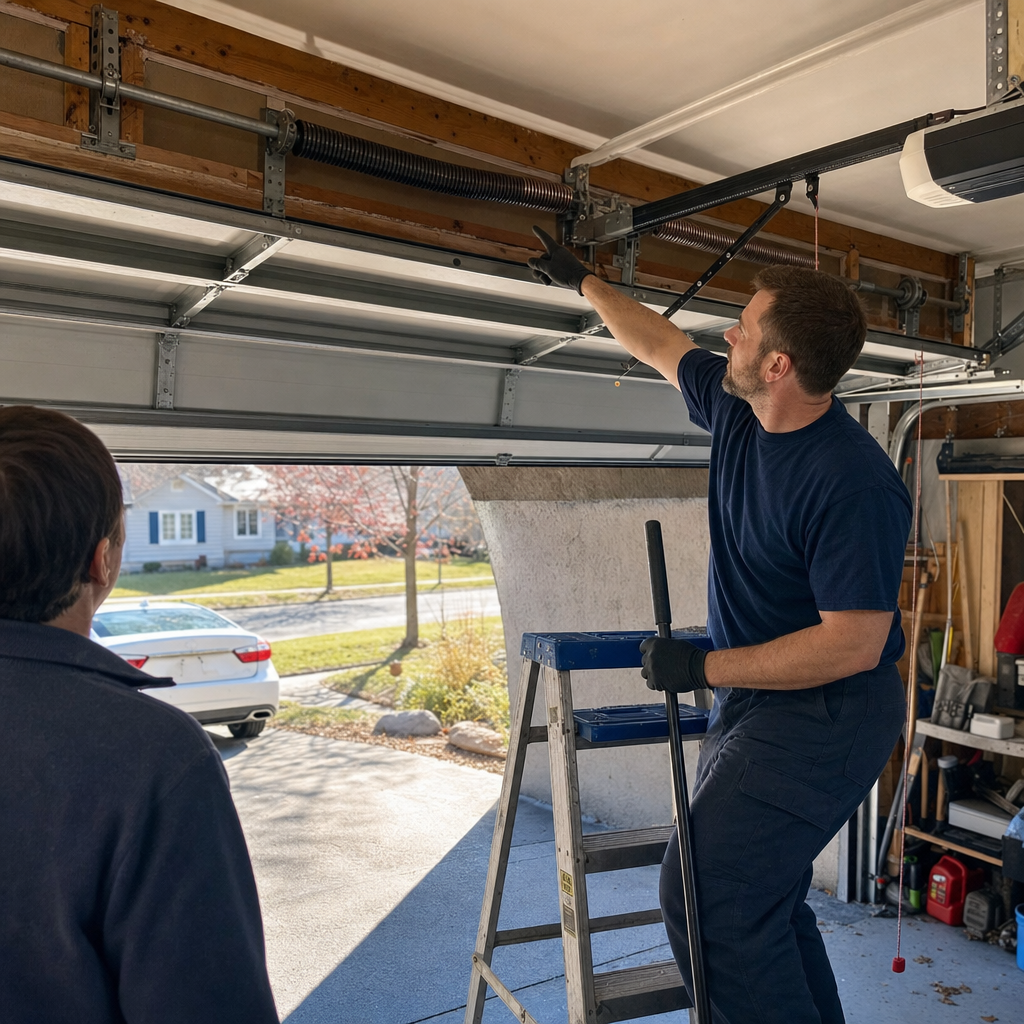
Your garage door reverses because its opener safety system detects resistance above a calibrated threshold and automatically backs the door up to prevent damage or injury. In Buffalo, the most common cause between November and March is a bottom rubber seal partially frozen to an ice-covered concrete slab — the opener correctly reads this as an obstruction, even though you see nothing in the doorway. If this is happening on a cold Buffalo morning right after the door touches the floor, it’s almost certainly the freeze-thaw cycle at work, not a broken opener. Call Vanguard Garage Door Repair Greater Buffalo at (888) 602-5316 — we’ll diagnose the exact cause and get your door closing properly before the next storm hits.
How Opener Force-Limit Sensors Actually Work (And Why “Nothing’s in the Way” Doesn’t Mean Nothing’s Wrong)
Every modern garage door opener — whether it’s a LiftMaster, Chamberlain, Genie, or another major brand — has a built-in force-limit sensor that measures resistance throughout the closing cycle. Think of it like a dimmer switch with a set ceiling: the motor pulls the door down with steady force, and if that force suddenly spikes because the door meets something it shouldn’t, the system reverses within seconds.
Here’s what most homeowners in Buffalo don’t realize: the sensor doesn’t know the difference between a child’s bicycle and a frozen rubber seal bonded to ice. It only knows that resistance crossed the safety threshold. That threshold is factory-calibrated for normal operation, and it’s doing exactly what it was engineered to do — protect whatever (or whoever) is beneath that 150-pound door.
The problem is that Buffalo’s unique lake-effect snow pattern creates freeze conditions that quietly defeat this calibration. Wet snow packs against the bottom seal during a storm, temperatures plunge overnight, and by morning you’ve got a seal that’s essentially glued to the slab. The opener tries to close, feels that tug, and reverses. To you, it looks like a malfunction. To the opener, it’s a successful safety activation.
We’ve seen this in every older neighborhood with alley-access garages — Elmwood Village, Allentown, North Buffalo, the West Side. These century-old wood-frame structures with their original cracked concrete floors are especially prone because the uneven surfaces let water pool and freeze in ridges that grab the seal even harder. William Davis, our Owner and Lead Technician, grew up in Black Rock watching his father deal with exactly these carriage-style garages, and two decades in the field hasn’t changed the pattern — only the frequency, as Buffalo’s storm intensity has increased.
The Buffalo Winter Diagnostic: Three Reversal Patterns, Three Different Fixes
Not every reversal is a frozen seal. The pattern of when and where the door reverses tells us everything we need to know. Here’s how we sort it on a service call:
- Reverses at the floor on cold mornings: Frozen bottom seal. The door travels normally until the last inch, then kicks back. This is the signature Buffalo winter failure. We clear the ice buildup, inspect the seal for tears (freeze damage is cumulative), and sometimes recommend a heavier-duty vinyl seal for homes that see this repeatedly.
- Reverses mid-travel, inconsistent timing: Photo-eye misalignment or obstruction. Buffalo’s heavy snow accumulation on alley surfaces shifts the sensor bracket on the door frame — the bracket settles when snow melts, then shifts again with the next storm. We’ve tracked this in homes near Sahlen Field and throughout the grid-and-alley neighborhoods where garages sit close to property lines with limited clearance for snow piles.
- Reverses immediately on close command, door barely moves: Spring tension imbalance or broken spring. The opener detects that the door is too heavy to lift with its calibrated force and reverses to protect the motor. In Buffalo’s polar vortex cold snaps — we’ve seen -10°F in January — torsion springs snap at higher rates because the metal becomes brittle. This is the most dangerous pattern; a door with a broken spring can come crashing down if the opener’s safety system is compromised.
William’s approach on every call is to watch the door cycle once before touching a single setting. Twenty years of Buffalo winters means he can read these reversal patterns in minutes, not by running down a generic checklist. The owner is the technician — there’s no junior crew member guessing at your expense.
The Dangerous DIY Fix We See Every Winter (Please Don’t Do This)
Here’s the call we dread: a homeowner has increased their opener’s force sensitivity to “power through” the frozen seal. It seems logical — if the opener thinks there’s an obstruction, just raise the threshold so it doesn’t notice, right?
This defeats the entire safety mechanism. That same increased force will now crush a garbage can, a pet, or a child who runs under the door. It also tears the bottom seal further, creating gaps that let more snow and water in, which freeze harder next storm, which makes you crank the force higher. We’ve replaced seals in Allentown homes where this cycle destroyed the entire bottom retainer and rusted out the door’s lower section — a $250–$500 Garage Door Off Track Repair in Buffalo, NY fix that started as a $20 seal issue.
The correct fix depends on the cause:
| Problem | Typical Buffalo Repair | Price Range |
|---|---|---|
| Frozen bottom seal (clearing + seal inspection) | Ice removal, seal adjustment or replacement | $110–$220 |
| Photo-eye realignment (winter-shifted bracket) | Bracket reset, beam alignment, testing | $120–$240 |
| Torsion spring imbalance or failure | Spring repair or replacement | $180–$340 |
| Opener force calibration (after proper diagnosis) | Safe threshold reset to factory spec | $120–$320 |
If I wouldn’t put it on my own garage, I’m not putting it on yours. That includes cranking force settings to mask a problem that has a proper, safer solution.
Why Buffalo’s Lake-Effect Snow Makes This Worse Than Other Cold Cities
Buffalo isn’t just cold — it’s cyclically, intensely, unpredictably cold in a way that breaks garage door hardware faster than in Rochester, Cleveland, or Syracuse. The 24–48 hours after a major lake-effect dump brings a predictable surge of emergency calls to our shop. The Southtowns corridor from South Buffalo through Orchard Park and Hamburg routinely sees 50% more snow than northern suburbs, and those rear-alley garages are the last surfaces plowed.
What happens next is specific to this region: wet lake-effect snow has higher moisture content than dry continental snow, so it packs denser and freezes harder against seals. The freeze-thaw cycle that follows — often within 48 hours as another band moves through — layers ice on ice. By February, some Buffalo homeowners are dealing with seals that have been frozen and torn repeatedly since Thanksgiving.
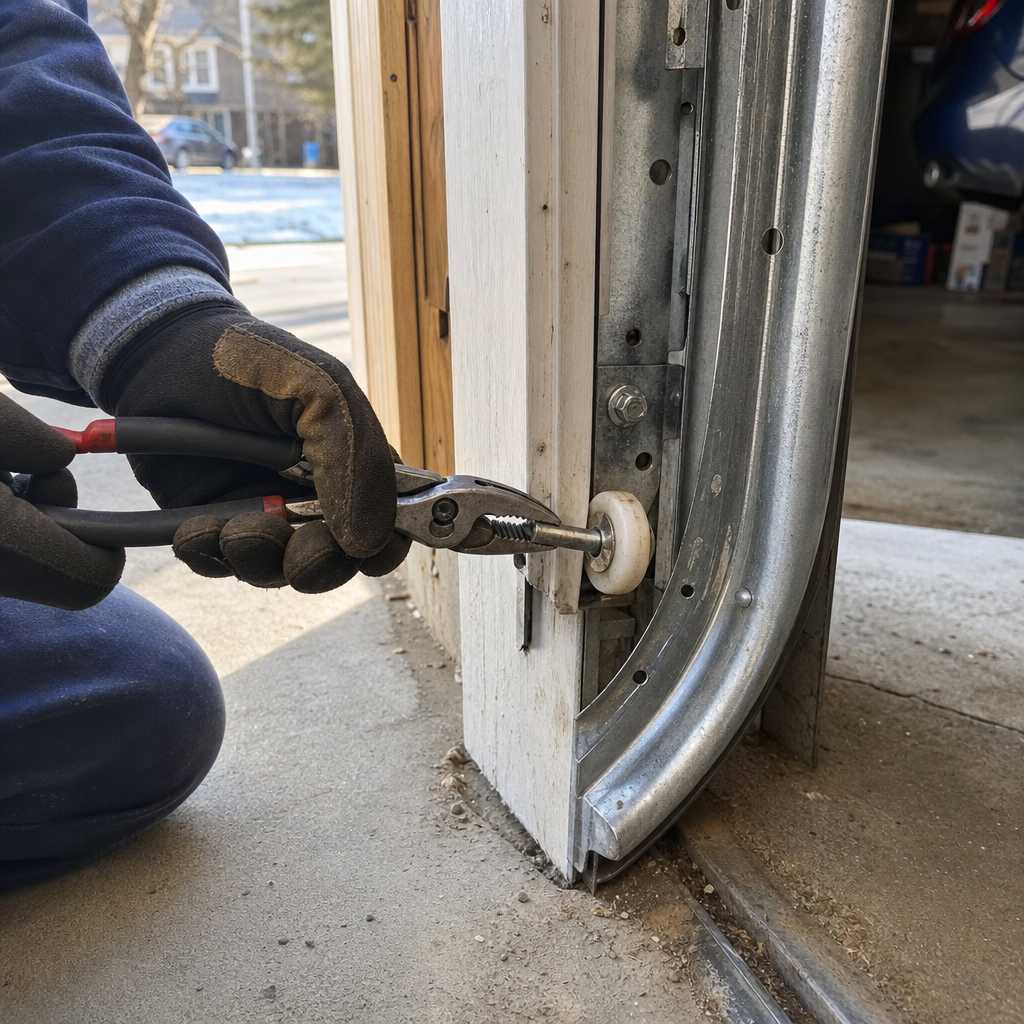
The road salt doesn’t help. Buffalo and NYSDOT apply unusually heavy salt loads from November through April, and that salt-laden meltwater runs into alley garages, accelerating corrosion on steel tracks, hinges, and springs. We’ve replaced track hardware in West Side garages where the bottom roller brackets were rusted to half their original thickness — not from age, but from salt exposure that comparable-age hardware in drier climates simply doesn’t see.
Your door, your brand — we know it. Whether you’re running a Raynor, LiftMaster, Chamberlain, or Genie system, we’ve got factory familiarity with the force-calibration protocols and safety specs for your exact model.
Common Local Scenarios: When Buffalo Homeowners Call Us
The “It Was Fine Yesterday” Morning Surprise
You hit the remote, the door starts down, touches the floor, and bounces back up. Temperature dropped to 15°F overnight. You check the photo-eyes — no blinking lights, no obvious obstruction. This is the frozen seal signature, and it’s the call we field most often in January and February. We carry replacement seals rated for Buffalo’s temperature swing range, and we know which retainer styles fit the narrow 8-foot openings common in pre-1940 housing stock.
The Intermittent Reversal That “Fixes Itself”
Door reverses Tuesday, works fine Wednesday, reverses again Friday. Homeowners blame the opener. Usually it’s the photo-eye bracket settling as snow melts and refreezes against the frame — the beam alignment is borderline, and temperature-driven expansion puts it in and out of tolerance. We see this especially in Elmwood Village and Allentown, where garages are set tight to lot lines and snow piles lean against the frames. A proper bracket reinforcement, not a new opener, solves it.
The Post-Storm Forced-Open Snap
You needed to get to work, the door was frozen shut, you hit the opener repeatedly or tried to muscle it. Now the spring’s broken and the door reverses immediately because the opener can’t lift the dead weight. This is the Emergency Garage Door Repair in Buffalo, NY call pattern that defines our winter scheduling — and it’s why we staff for post-storm response rather than waiting out the weather. When it can’t wait, we’re already moving.
The “It Only Does It When It’s Cold” Pattern
Classic lubrication failure. Standard garage door grease thickens in sub-zero temperatures, creating resistance that the opener reads as an obstruction. Buffalo’s polar vortex events — we’ve had stretches where temperatures don’t rise above 5°F for a week — turn standard lubricant into near-solid drag. We use low-temperature synthetic formulations specifically for this climate, applied during seasonal maintenance calls that 1,200+ homeowners have learned to schedule before the first major storm.
What You Can Safely Check Yourself (And When to Stop)
Before calling, there’s a short, safe checklist that helps us help you faster:
- Look at the bottom seal — is it visibly stuck to the floor, or do you see ice ridges under it? If yes, don’t force the door. Warm water (not boiling, not a torch) can help, but call us if the seal tears or the problem repeats.
- Check the photo-eye LEDs — both should glow steady. If one blinks or is dark, check for snow packed against the lens or a bracket that’s visibly shifted.
- Listen to the opener motor — does it strain and reverse, or reverse immediately with no strain? Straining suggests mechanical resistance (seal, track, spring). Immediate reversal suggests electrical/sensor issues.
- Look at the springs — are they intact, or is there a visible gap in the coil? Never touch a torsion spring. These are under extreme tension and can cause serious injury or death. This is always a call-a-pro situation.
We don’t give step-by-step DIY instructions for force-limit adjustment, spring work, or any repair that could put you under a falling door or near high-tension hardware. The safety systems exist for a reason — let’s keep them working properly, not bypassed.
FAQs
Most reversal issues in Buffalo cost between $150 and $600 to diagnose and repair properly. A simple frozen seal clearing and adjustment runs $110–$220, photo-eye realignment is $120–$240, and spring repair runs $180–$340. We don’t quote over the phone without seeing the door — every reversal pattern has a different cause, and guessing wastes your time. Call (888) 602-5316 for a free, no-pressure estimate — we’ll look at the door, explain what we find, and give you an exact number before any work starts.
Yes — we offer the Best Garage Door Repair in Buffalo, NY for urgent situations, and reversal problems that leave your door stuck open or insecure are exactly the kind of call we prioritize. William Davis handles the dispatch directly, so when you describe the reversal pattern, he’s already narrowing the cause before the truck rolls. Same-day service is our standard for security-sensitive issues in Buffalo, not an upgrade you pay extra for.
Most reversal problems aren’t the opener at all — they’re the seal, the photo-eyes, or the springs telling the opener to reverse. Replacing a perfectly good opener because it’s doing its safety job correctly is money wasted. We’ve saved Buffalo homeowners hundreds by diagnosing the actual cause: a $120 photo-eye realignment versus a $550 new opener installation. William will tell you straight when a repair makes more sense than a replacement — he’s built that reputation over 20 years, and the 1,233 reviews reflect it.
Because Buffalo’s lake-effect snow and hard freeze cycles create physical obstructions — frozen seals, ice-ridge buildup, snow-shifted photo-eye brackets — that don’t exist in warmer months. The opener isn’t seasonal; the conditions around your door are. Winter-specific maintenance — proper seal type, low-temp lubrication, bracket reinforcement — prevents most of these reversals before they start. We schedule pre-winter tune-ups across Buffalo’s older neighborhoods specifically for this pattern.
When Your Door Won’t Stay Closed, We’re Already in Buffalo
A reversing garage door isn’t just frustrating — it’s a security gap, an energy drain, and a sign that something in the system needs proper attention. The fix might be a 20-minute seal adjustment, or it might be a spring replacement that prevents a dangerous failure next storm. Either way, guessing wastes a morning and risks making it worse.
Vanguard Garage Door Repair Greater Buffalo has handled this exact problem across every Buffalo neighborhood for two decades. Owner and Lead Technician William Davis brings 20 years of direct field experience to every job — not a rotating crew, not a dispatcher sending unknowns. From Black Rock to the Southtowns, we’ve read the reversal patterns, replaced the seals that Buffalo winters destroy, and kept the safety systems working the way they should.
If you’d rather have it looked at, Garage Door Repair from Vanguard Garage Door Repair Greater Buffalo offers a no-pressure assessment in Buffalo — call (888) 602-5316.
Written by William Davis, Owner & Lead Technician at Vanguard Garage Door Repair Greater Buffalo, serving Buffalo, NY.