
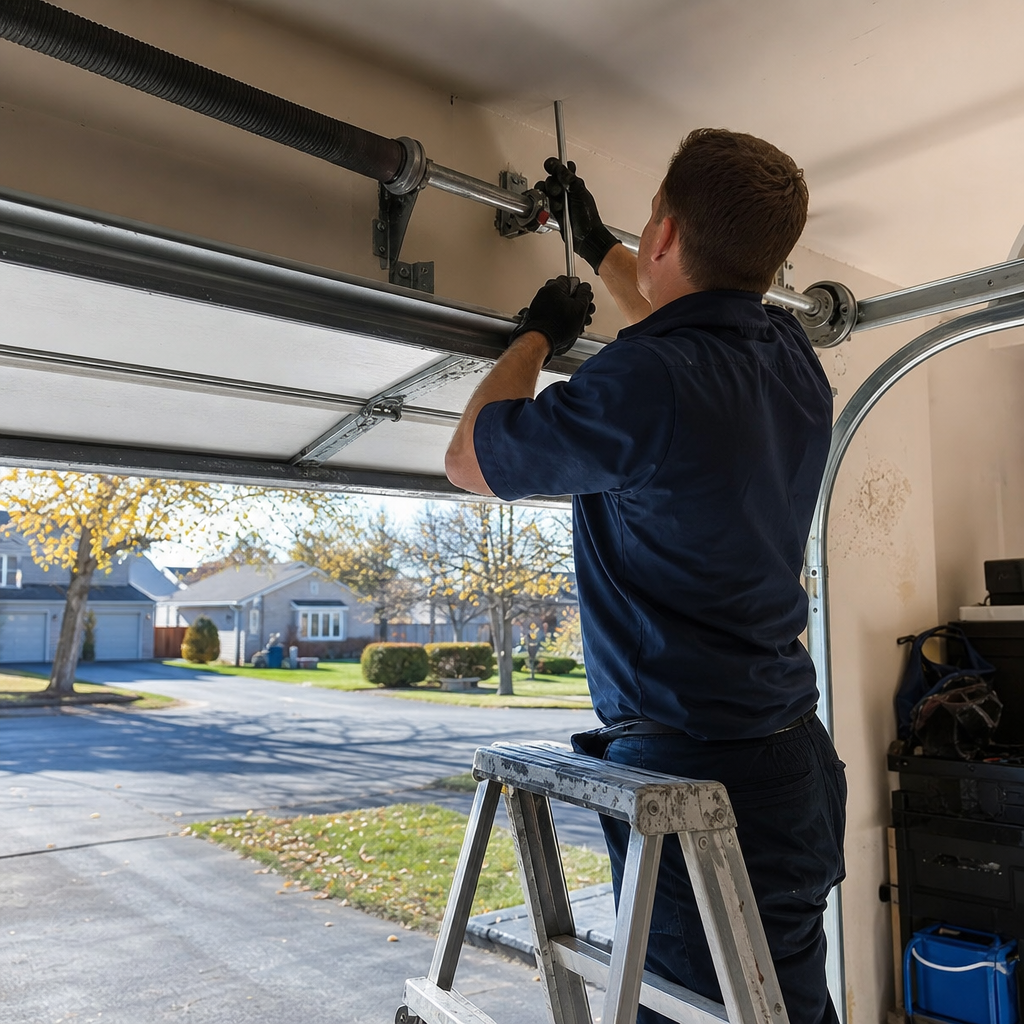
Garage Door Opener Installation in Buffalo, NY — What It Actually Costs and What Your Garage Needs
Garage door opener installation in Buffalo typically runs $250–$550 and is usually completed in a single visit. The exact price depends on your opener type, whether your garage needs electrical work, and whether we’re mounting on a standard ceiling rail or working around the tight rafters common in Buffalo’s older alleyway garages. Call (888) 602-5316 for a free, on-site estimate — we bring the Garage Door Opener Near Me in Buffalo, NY options to you and price it before any work starts.
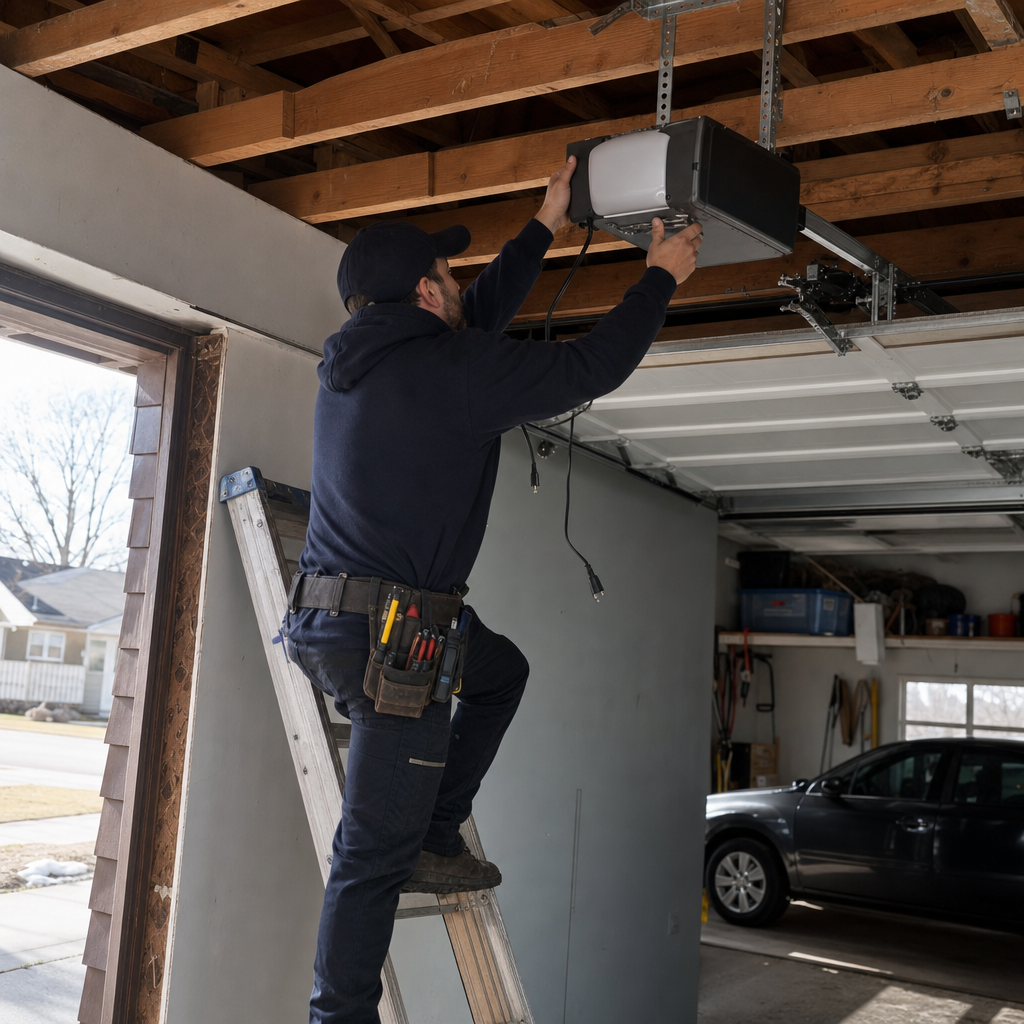
Two decades of garage door experience has taught us something the big-box installation guides won’t tell you: putting an opener in a century-old Elmwood Village detached garage is a fundamentally different job than mounting one in a new Orchard Park attached two-car. The rail length, trolley type, force calibration, and even whether a standard ceiling-mount unit will physically fit between rafters — all of it changes based on Buffalo’s specific housing stock. We’ve commissioned hundreds of openers across the city, and the ones that fail prematurely almost always trace back to an installer who treated every garage like a suburban blank slate.
Why Buffalo’s Alley Garages Change the Opener You Need
Buffalo’s city neighborhoods — Elmwood Village, Allentown, North Buffalo, the West Side — were built on a grid-and-alley plan between roughly 1890 and 1940. Most homes have detached single-car garages accessed from rear alleys, not front driveways. These wood-frame structures are now a century old, and they’ve settled in ways that matter for opener selection.
In a typical Southtowns suburban attached garage, we’re mounting a standard rail-style opener to engineered trusses with 8–10 feet of clearance and a level header. In an Allentown alley garage, we might have 6.5 feet of clearance, original 2×4 rafters spaced irregularly, and a concrete slab that’s heaved enough to create a ¾-inch gap under the door in summer that seals tight as a drum in winter. That changes everything.
The three compatibility factors we check on every Buffalo installation:
- Ceiling height and rafter configuration: Standard rail-style openers need roughly 7–8 feet of headroom and a stable mount point. Many older Buffalo garages lack both, which pushes us toward jackshaft (wall-mount) or side-mount openers that cost more but actually fit.
- Door condition and balance: An opener should never be the primary force lifting a door. In Buffalo, we regularly see doors with original hardware, corroded tracks from road salt, or springs that are borderline fatigued. We address these first — because an opener installed on a poorly balanced door will burn out its motor in 18 months.
- Slab condition and freeze binding: Heaved concrete creates uneven contact with the bottom seal. When that seal freezes to the slab after a lake-effect event, the opener’s force settings either need to be calibrated for Buffalo’s reality, or the unit will trip its safety reverse every cold morning and you’ll think it’s broken.
William Davis, Owner and Lead Technician at Vanguard, grew up in Buffalo’s Black Rock neighborhood working on the old carriage-style garages off Niagara Street. He knows which alleys flood in spring thaw, which blocks still have the original 1920s hardware, and whether your garage’s electrical was updated during a 1980s renovation or still runs on knob-and-tube. That local knowledge prevents the “surprise” discoveries that turn a half-day job into a two-day ordeal.
How Cold Weather Breaks Poorly Calibrated Openers
Here’s a story we see repeated every January: a homeowner in South Buffalo or Hamburg calls us convinced their brand-new opener is defective. The door opens fine at noon but won’t budge at 6 a.m. when it’s 5°F. The motor hums, the light flashes, and the door moves six inches before reversing.
The opener isn’t broken. It’s miscalibrated.
Factory default force settings assume moderate climates and doors that move freely year-round. Buffalo’s reality is different. After a major lake-effect dump — the kind that deposits 2–4 feet overnight in the Southtowns corridor — wet snow packs against the bottom seal. When temperatures plunge to -10°F during a polar vortex snap, that seal freezes solid to the slab. The opener now needs roughly 30–40% more starting force to break that seal free, but its safety reverse threshold is still set to factory specs. It detects the extra resistance and assumes a child or pet is trapped.
What we do differently: On every Buffalo installation, we set force limits based on seasonal door behavior, not factory defaults. We test the door’s actual resistance across its full travel — including that sticky bottom six inches where the seal meets heaved concrete. We also walk homeowners through How to Program Garage Door Opener? (Buffalo, NY) for seasonal adjustment, because a setting that works in October may need tweaking by February.
This is where finding the Best Garage Door Opener in Buffalo, NY matters. Over 20 years, we’ve commissioned and serviced openers from LiftMaster, Chamberlain, Genie, Craftsman, and others across Buffalo’s full climate range. Some brands handle sub-zero starts more gracefully than others — not because of horsepower, but because of motor design, gear material, and how their force-sensing algorithms respond to gradual resistance changes versus sudden spikes. When we recommend a specific model for your garage, that recommendation comes from watching how those units performed in Black Rock basements and Hamburg ranch houses, not from reading spec sheets.
Electrical Reality in Pre-1940 Garages
This is the conversation that saves homeowners from a ruined installation day: does your garage have a dedicated outlet where the opener needs it?
Many Buffalo garages built before 1940 were electrified during piecemeal renovations — sometimes in the 1960s, sometimes the 1980s, sometimes never for the alley structure specifically. The opener location (typically center of the header, or wall-mounted beside the door) needs a grounded outlet on a circuit that can handle the motor’s draw plus lighting. We’ve arrived at jobs where the only outlet is a single ungrounded receptacle in the far corner, installed for a 1970s workbench light.
What this means for your timeline and budget:
| Electrical Scenario | Typical Add-On Cost | Timeline Impact |
|---|---|---|
| Existing grounded outlet near opener location | None | Standard single visit |
| Outlet exists but needs grounding or circuit upgrade | $150–$300 | May require electrician coordination |
| New circuit run from main panel to garage | $400–$800 | Separate electrical permit and inspection |
We don’t perform electrical panel work ourselves — we’re garage door specialists, not electricians — but we’ll tell you exactly what we need and when, so you can coordinate accordingly. The owner is the technician on every job, which means you’re getting William’s direct assessment of your garage’s readiness, not a subcontractor who’s hoping the electrical works out.
What We Install and What It Costs
Our Garage Door Opener service covers repair, replacement, and new installation across all major brands. For installation specifically, here’s how Buffalo pricing breaks down:
| Service | Price Range |
|---|---|
| Garage Door Opener Installation | $250–$550 |
| Opener Repair | $120–$320 |
| Spring Repair | $180–$340 |
| Cable Repair | $130–$250 |
| Track Realignment | $120–$240 |
| Roller Replacement | $110–$220 |
| New Door Installation | $700–$2,200 |
The $250–$550 installation range assumes a standard ceiling-mount chain or belt drive unit in a garage with adequate headroom and existing proper electrical. Jackshaft or wall-mount openers (often necessary in Buffalo’s tight older garages) run toward the higher end. If your door needs rebalancing, hardware replacement, or track work before the opener can be safely commissioned, we’ll quote that separately and explain why — we don’t bury necessary prep work in a lowball opener price.
Your door, your brand — we know it. We’re factory-familiar with LiftMaster, Chamberlain, Genie, Clopay, Amarr, Wayne Dalton, Craftsman, and Raynor, which covers virtually any opener or door system a Buffalo homeowner has. If I wouldn’t put it on my own garage, I’m not putting it on yours.
Our Installation Process — From Quote to Commissioning
Every installation follows the same sequence we’ve refined across two decades:
- On-site assessment: We measure headroom, check rafter spacing, test door balance and track condition, verify electrical, and identify any slab heave or binding points. This takes 15–20 minutes and costs nothing.
- Opener selection: Based on your garage’s physical constraints, your door’s weight and condition, and your preferences for chain, belt, or screw drive, we recommend 2–3 specific models with installed pricing.
- Pre-installation prep: If the door needs spring adjustment, roller replacement, or track realignment, we complete that first. An opener is only as good as the door it operates.
- Mount and wire: We install the header bracket, rail assembly, motor unit, and safety sensors — with particular attention to sensor alignment, because Buffalo’s freeze-thaw cycle will knock misaligned sensors out of whack within a month.
- Force calibration and safety testing: We set open/close force, limit switches, and safety reverse sensitivity based on your door’s actual resistance profile — not factory defaults.
- Walkthrough and documentation: We show you manual release operation, remote programming, and seasonal adjustment points. You get model numbers, warranty cards, and our direct number for any follow-up.
1,200+ homeowners can’t be wrong — our 1,233 verified reviews averaging 4.8 stars reflect the fact that we treat every installation as if we’re coming back to service it (because we often do, for maintenance, and we want that door to run clean).
When It Can’t Wait — Emergency Opener Service
Sometimes an installation isn’t scheduled — it’s forced. Your opener died during a February cold snap, the door is stuck open or won’t open at all, and your car is trapped inside or your garage is exposed. When it can’t wait, we offer emergency garage door service for exactly these situations. William handles urgent calls directly, and we prioritize getting your door secured and functional, then schedule any permanent installation work if a full replacement is needed.
The 24–48 hours after a major lake-effect event brings a predictable surge of emergency calls from homeowners who forced a frozen-shut door. We’ve learned to staff for that pattern rather than treat it as a surprise. If you’re reading this during or right after a storm, call now — we know what’s coming and we’re ready.
FAQs
Garage door opener installation in Buffalo costs between $250 and $550, with most standard ceiling-mount chain or belt drive units falling in the $300–$450 range. Jackshaft or wall-mount openers — often necessary in older city garages with limited headroom — run toward the higher end. Call (888) 602-5316 for a free, exact quote based on your garage’s specific layout and electrical situation.
Yes, but it usually requires a jackshaft or wall-mount opener rather than a standard ceiling-rail unit. Many Buffalo garages built before 1940 have 6.5–7 feet of clearance with irregular rafter spacing that won’t accommodate a traditional rail assembly. We’ve installed wall-mount openers from LiftMaster and Genie in dozens of Elmwood Village and Allentown alley garages where a standard unit simply wouldn’t fit.
Your opener’s force settings are likely still at factory defaults, which don’t account for Buffalo’s freeze-thaw reality. When your bottom seal freezes to a heaved concrete slab — common after lake-effect snow events — the opener detects the extra resistance and trips its safety reverse. We recalibrate force limits specifically for your door’s seasonal resistance profile, which solves the problem without compromising safety. If you’re experiencing this now, call (888) 602-5316 — we can often adjust it in a single visit.
Repair typically costs $120–$320, while new installation runs $250–$550. If your opener is under 8 years old and the issue is a failed gear, sensor, or circuit board, repair usually makes sense. If it’s over 12 years old, uses obsolete parts, or has already been repaired once, replacement is usually the better value — especially given the efficiency and safety improvements in current models. William will give you a straight answer on which path saves money long-term; we’ll never push a new unit when a repair is the smarter call.
Ready for a Properly Installed Opener That Handles Buffalo Winters?
Don’t settle for an installer who treats your century-old alley garage like a suburban new build. Get an owner-technician who knows Buffalo’s housing stock, calibrates for our climate, and stands behind every installation with two decades of hands-on expertise. Call (888) 602-5316 now for your free estimate — we’ll come to you, assess your garage honestly, and quote the job before any work begins.
Written by William Davis, Owner & Lead Technician at Vanguard Garage Door Repair Greater Buffalo, serving Buffalo, NY.